
"Ethiopia coffee grades"
4000 article(s) found

Unique Ethiopian Coffee Estate Boutique Coffee Bean Cultivation Location Climate Sea
Ethiopia is home to Arabica coffee, and it is in the forests of the Ethiopian Kaffa region that you can see Arabica coffee growing wild. In Ethiopian, coffee is called Bun or Buna, and coffeebean may be translated from Kaffa Bun. Arabica coffee was discovered early in the Harar area and is likely to come

The main source of Italian flavor coffee coffee is the coffee producing area.
If you see "Italian", "Vienna", "Nanyi" and other signs on the coffee label, do not mistakenly think that the coffee beans have anything to do with the above-mentioned place names-probably not, because traditionally, "Italy" and "Vienna" are synonymous with the degree of roasting (or blending) and do not mean that they are coffee from Italy or Vienna (such as
How many defective beans are there in Yega Xuefei G1? what's the taste of Yega Chefe? how to make Yega Chefe Coffee?
For more information on coffee beans, please follow the Coffee Workshop (Wechat official account cafe_style) the Federal Democratic Republic of Ethiopia (English: The Federal Democratic Republic of Ethiopia), referred to as Ethiopia or Ethiopia, is a country located in northeast Africa. It borders Djibouti and Somalia to the east.

A brief introduction to the description of the flavor and aroma characteristics of coffee beans with wild taste.
The highest grades of Sidamo (Yirgacheffe, Sidamo) are Grade 2 and Grade 3 (G2 and G3), and most of the sun-processed coffees in eastern Ethiopia are Grade 4 or Grade 5 (G4 and G5). In many cases, level 4 coffee is marked as level 5 in order to reduce taxes. At present, the grading is not uniform and messy, because there are primary and secondary sun processing (Grand G).

Description of Coffee Bean Flavor in Sidamo, Ethiopia
Description of Coffee Bean Flavor in Sidamo region of Ethiopia Coffee grading and quality control system is divided into producer, regional and national levels in Ethiopia. All coffee is inspected by local inspection agencies before leaving the country of origin, and then re-tested at the coffee inspection and grading centers in Addis and Diredawa to determine its quality.
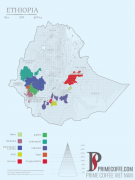
Story of planting grades in Ethiopian Coffee producing area characteristics of flavor and taste of Yega Sidamo coffee beans
As we all know, Ethiopia is the birthplace of coffee. Coffee is the main export commodity grown in Ethiopia. Coffee grown in Ethiopia is famous for its excellent quality and flavor. To this day, Ethiopia is one of the world's largest coffee producers and exporters and is in a leading position in the world.

Introduction to the characteristics of coffee flavor and taste of Ethiopian coffee manor with long, pointed beans
The highest grades of Ethiopian washed coffee Yega Chuefei G1 G2 Sidamo (Yirgacheffe, Sidamo) are Grade 2 and Grade 3 (G2, G3), while most of the sun-processed coffee in eastern Ethiopia are Grade 4 or Grade 5 (G4, G5). In many cases, level 4 coffee is marked as level 5 in order to reduce taxes. At present, the grading is not uniform and messy, because there is also sun processing.
Why coffee beans are called coffee beans?
Good ripe beans are sometimes labeled single-serve coffee grades. The more detailed the coffee classification, the better the coffee quality. But regular coffee isn't labeled. Central American coffee is classified according to the elevation at which it is grown, with beans above 4500 feet labeled SHB(Strictly Hard Bean). AA+ is the highest grade of Kenyan coffee.
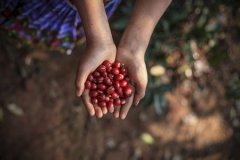
A brief introduction to the treatment method of grinding degree and baking degree of Yega Xuefei Adoto boutique coffee beans with excellent taste
3.Flavor characteristic washing Yejiaxuefei has a unique lemon flavor, refreshing jasmine flavor, as well as soft fruit acid and citrus flavor, fresh and bright taste. Sun Yega Chuefei has charming fruit acidity, clean fermented fruit sweet, elegant fruit wine, sweet finish. 4. The grading system of Ethiopian coffee is not distinguished by the number of items, but by the number of items.

Introduction to the Flavor of Ethiopian Coffee planting method Grade and Grade Yega Chuefei
Ethiopia is the first country to discover coffee, and it belongs to the most important producing country in terms of coffee quality and output, with an annual production of about 350000 tons. Ethiopia is famous all over the world for its mocha beans in Hara, of which Yirgacheff is an Allah produced by Sidamo in the south in a small area with an altitude of 1700 to 2100 meters above sea level.

The grade flavor of Ethiopian coffee
Essel coffee is processed by two processing methods: sun and water washing. The flavor of coffee processed by different processing methods is very different. Generally speaking, the alcohol thickness and soil taste of washed Sidamo, Yirgacheffe and Limmu coffee are slightly lower, and the taste of sun-processed coffee is more wild. But Ethiopian coffee may taste different from batch to batch, which requires more cup tests before it can be found.
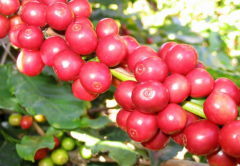
The importance of coffee classification and grading How is Ethiopian coffee grading divided
Ethiopia is the first country to discover coffee. It is the most important producing country in terms of coffee quality and yield. The annual production quantity is about 350,000 tons. Ethiopia is famous all over the world for its mocha beans blown by the sea. Yirgacheff is the Arabica produced by Sidamo in the south at an altitude of 1700~2100 meters.
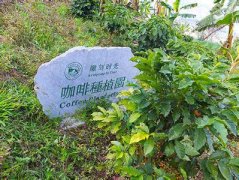
A brief introduction to the Origin and Development of Fine Coffee beans with elegant Fruit and Wine flavor
However, in the past two years, Yejia snow coffee is unusual, frequently launched amazing sun beans, and become a boutique market Deep-Fried Chicken! The beans are small, neat and round. Ethiopian sun beans are generally G3--G5, but this bean is G2, which is equal to the grade of washed beans. Although there are still a few defective beans, they belong to the sun beans compared to those of Harald and Sidamo.
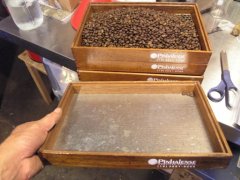
The influence of the selection of coffee beans on the importance of defective beans according to the screening and grading criteria of coffee beans in Ethiopia
In the coffee market, the size of coffee beans is very important. On the one hand, several coffee producers define their premium by the size of coffee beans. For example, the famous Kenyan AA coffee costs more than the smaller Kenyan AB coffee. When the screening size is large, the price will increase. The main theory on the market is that high-altitude coffee grows more slowly and has higher density than low-altitude coffee.

Acidity and texture of Ethiopian Coffee Manor Flavor characteristics of Fine Coffee beans
In Ethiopia, the grading and quality control system of coffee is divided into three levels: producer, regional and national. All coffee is inspected by local inspection agencies before leaving the country of origin, and then re-tested at the coffee inspection and grading centers in Addis and Diredawa to determine its quality grade. Coffee is graded before auction and sale, for all involved in production, acquisition,

A brief introduction to the Origin, Development, History and Culture of Fine Coffee beans in the aromatic Ethiopian Coffee Manor
In many cases, level 4 coffee is marked as level 5 in order to reduce taxes. The current classification is not uniform and messy, because there are also first-and second-tier (Grand G2) Yirga Cheffe processed by tanning, but the highest level of Harald (Harar) is level four (G4). The coffee-producing areas of Ethiopia are Sidamo, Harald and Yegashafi (

Acidity and texture introduction to the characteristics of Coffee Flavor Manor in Xidamo Shaqiso producing area
In Ethiopia, the grading and quality control system of coffee is divided into three levels: producer, regional and national. All coffee is inspected by local inspection agencies before leaving the country of origin, and then re-tested at the coffee inspection and grading centers in Addis and Diredawa to determine its quality grade. Coffee is graded before auction and sale, for all involved in production, acquisition,

Description of Manor Flavor in Coffee Shachiso producing area of Ethiopia introduction to the taste of grinding scale varieties
According to the taste of the manor flavor description and grinding scale variety in the coffee producing area of Ethiopia, ET produces a lot of coffee, but unlike other producing countries, the domestic coffee consumption of ET is also very large, which is quite different from that of many coffee farmers who do not drink coffee only for the sake of the economy. Half of ET's production contributes to its own citizens. Of course, like other producing countries that earn foreign exchange from coffee.

Introduction to the flavor and taste characteristics of Ethiopian coffee manor with rich alcohol thickness
The highest grades of Ethiopian washed coffee Yega Chuefei G1 G2 Sidamo (Yirgacheffe, Sidamo) are Grade 2 and Grade 3 (G2, G3), while most of the sun-processed coffee in eastern Ethiopia are Grade 4 or Grade 5 (G4, G5). In many cases, level 4 coffee is marked as level 5 in order to reduce taxes. At present, the grading is not uniform and messy, because there is also sun processing.

Introduction to the flavor and taste characteristics of Ethiopian coffee manor with rich alcohol thickness
The highest grades of Ethiopian washed coffee Yega Chuefei G1 G2 Sidamo (Yirgacheffe, Sidamo) are Grade 2 and Grade 3 (G2, G3), while most of the sun-processed coffee in eastern Ethiopia are Grade 4 or Grade 5 (G4, G5). In many cases, level 4 coffee is marked as level 5 in order to reduce taxes. At present, the grading is not uniform and messy, because there is also sun processing.